Crocin and safranal: saffron’s colour and aroma compounds, explained
What crocin and safranal are, where they come from in the saffron stigma, what preclinical research explores, and why a saffron extract should specify both.
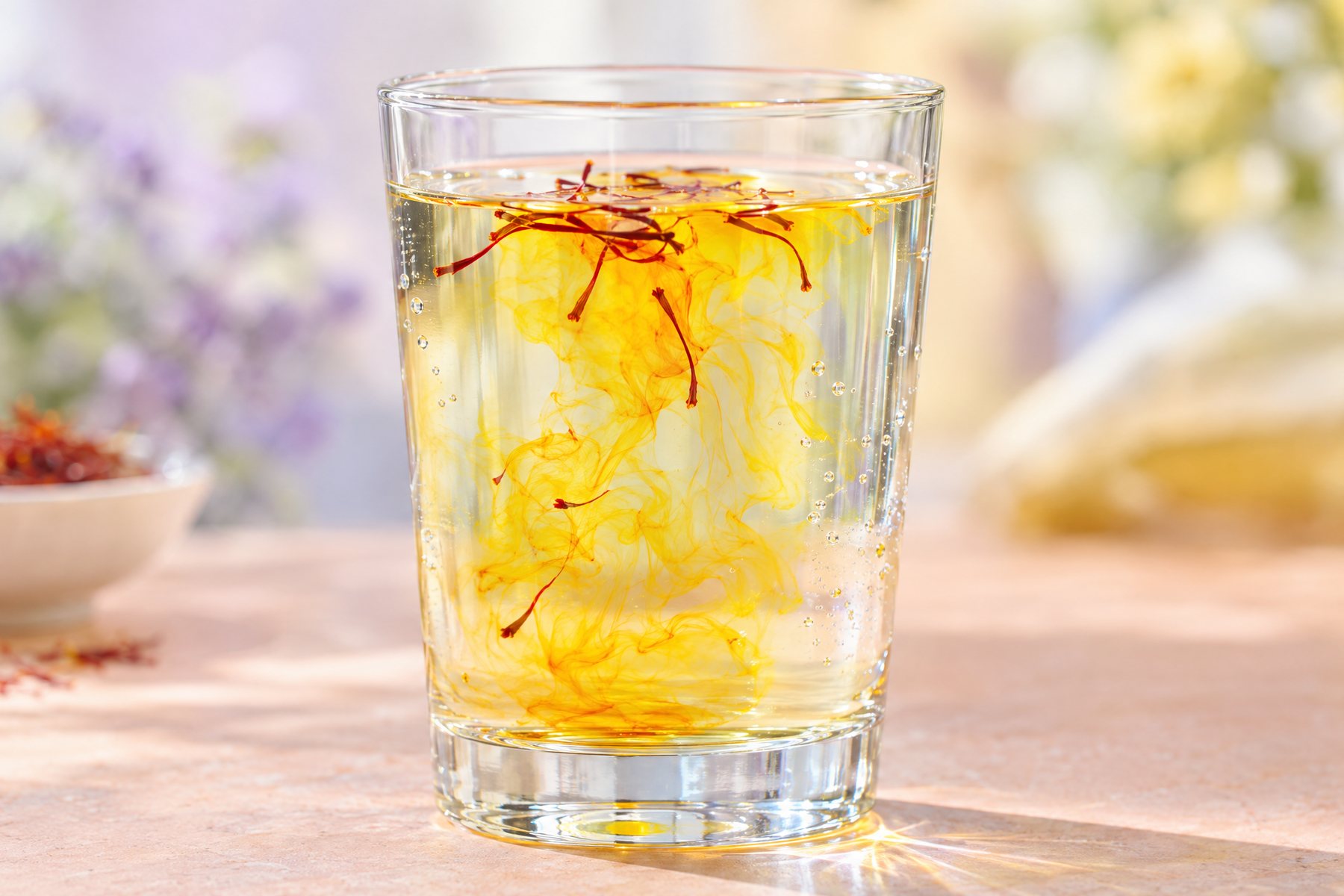
Every saffron thread is the dried stigma of a single flower, Crocus sativus L. Each flower carries just three stigmas, picked by hand, which is why saffron has always been precious. Two groups of compounds inside those threads account for most of what makes saffron recognizable, and they are the two markers Saffrion 42™ is standardized to.
Crocins: the colour
Crocins are water-soluble carotenoid pigments that carry sugar groups. They are responsible for the deep golden colour saffron releases into water, and they are the colour marker in the Saffrion 42™ specification, with a minimum of 3.0%.
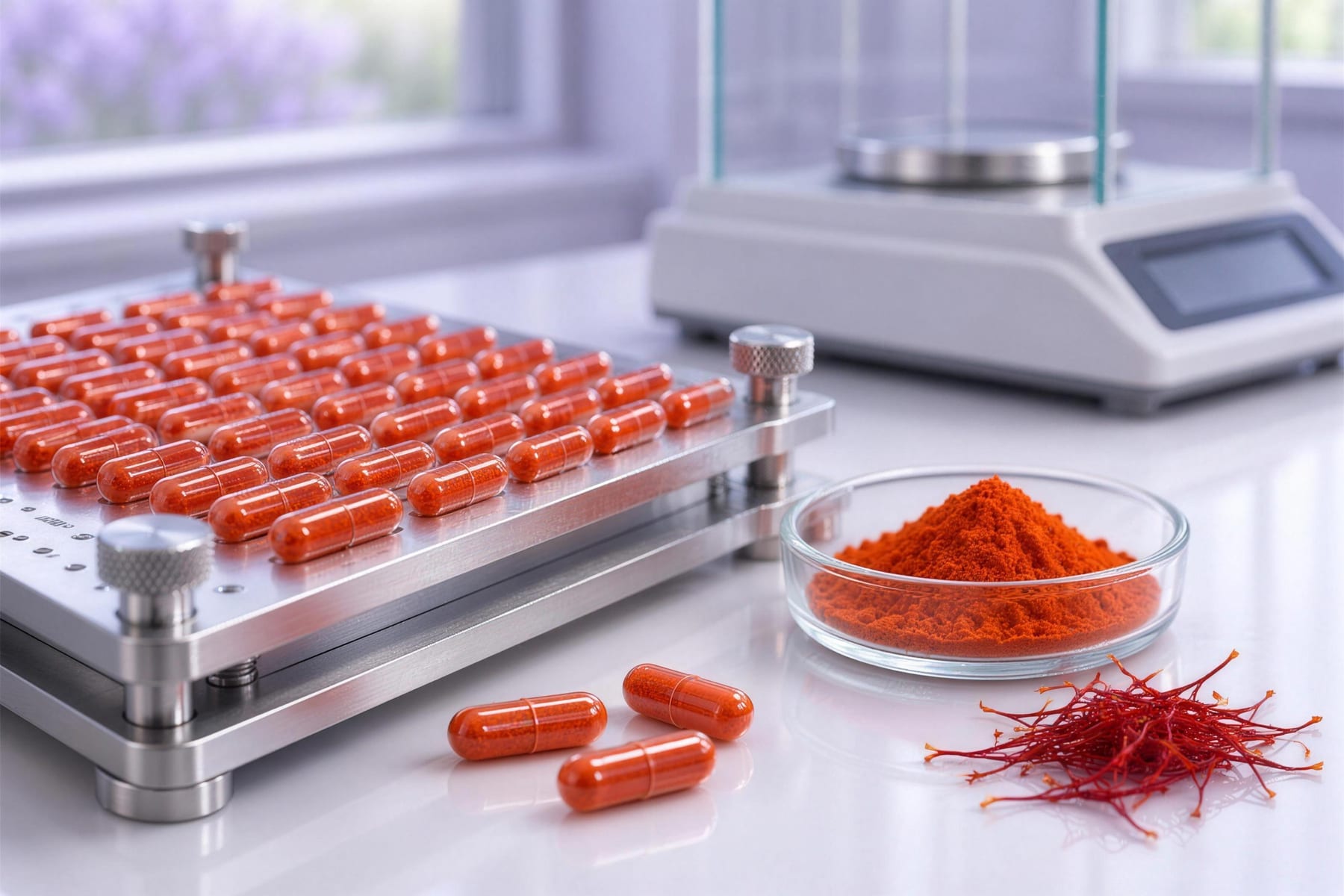
Their water solubility matters for an extract: Saffrion 42™ is water-extracted, which suits the water-soluble crocins.
Crocins occur in trans and cis forms. The specification requires at least 85 parts trans to 15 parts cis.
Safranal: the aroma
Safranal is a volatile compound of the monoterpene family and the main source of saffron’s characteristic aroma. It largely forms from picrocrocin, saffron’s bitter-tasting precursor, as the stigmas are dried. [4] Safranal is the aroma marker in the specification, with a minimum of 1.2%.
Because it is volatile, safranal can be lost if an extract is handled carelessly, which is one reason it is worth specifying and measuring on its own.
What preclinical research explores
Researchers have studied both compounds in preclinical models, meaning laboratory and animal studies rather than human trials.
- Crocins have been studied for interaction with serotonergic signalling, including serotonin availability. Preclinical models also explore neuroplasticity signalling and antioxidant activity.
- Safranal has been associated in preclinical research with modulation of GABAergic activity, linked to the relaxation response and neural excitability balance.
This is why Saffrion 42™ pairs the two in one extract: one standardized ingredient with two complementary research targets, emotional tone and calm.
Mechanistic descriptions summarize preclinical literature. They are not health claims for the ingredient or for finished products.
Why both are specified
Crocins and safranal behave differently in the plant, in processing and in storage. Setting a minimum for each, and measuring each by chromatographic marker analysis, is the most direct way to confirm both are present, batch after batch.
For a closer look at how the two minimums work together, read What dual standardization means for a saffron extract.
Reference
- [4] Main bioactive compounds of saffron, 2024. PMC11243231
Professional content for product development, for B2B use only.